
AI Progress In Cell Phones (Shortpost)
Creating an analogy for progress
(I’m attempting something a little different, a snippet rather than a longer post, containing a single idea that isn’t entirely fleshed out. Nonetheless, it might be useful to reference later.)
I have a hard time explaining to most people just how fast the pace of AI progress currently is. If they’re already following the industry it’s easier, but for people who aren’t, who only use AI occasionally or mostly just use Google’s AI results, it’s difficult to give them a sense of how shockingly, ridiculously fast the industry has been moving.
ChatGPT 3.5 - one of the big ones that really made people aware of Large Language Models as a technology and how useful they had the potential to be - came out in November 2022, not even three and half years ago.
And already around a third of all code is being written by LLMs like ChatGPT and (my preference) Claude.
Still, for those unaffected by these AIs or those who simply see technological progress and don’t have a sense for how fast it is, here’s an analogy that might help.
Cell Phones
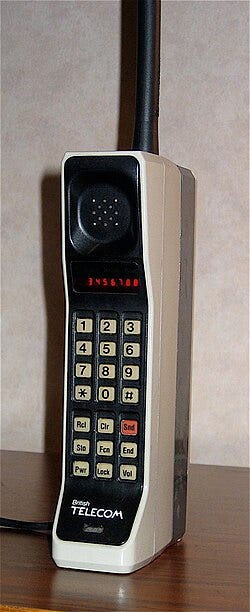
Cell phones began to be commercially available in the 1980s with the DynaTAC 8000x:
It wasn’t really a computer the way that modern smartphones are computers; that honor belongs to the IBM Simon, released in 1994:
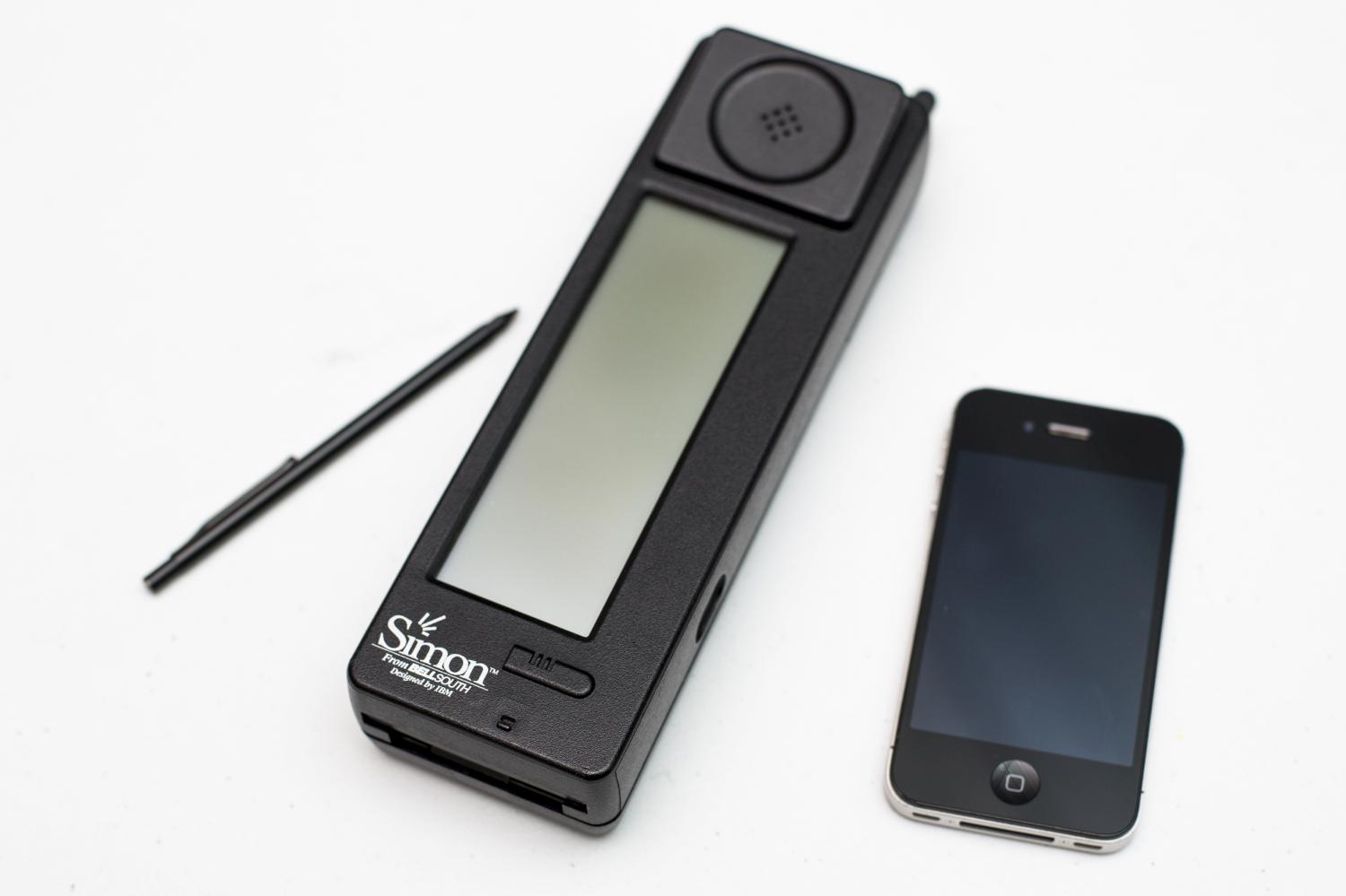
In order to compare performance across ‘smart’ phones, we’ll use clock speed and number of cores. This isn’t a perfect metric, but it communicates a real sense of how much things have changed.
The IBM Simon had a single core running at 16MHz.
The modern iPhone 16 from 2024 has 6 cores: two performance cores at 4GHz and four efficiency cores at 2.4GHz. Even just looking at the performance cores, that’s a 250x increase in clock speed per core — and there are six of them.
Putting aside that each modern clock cycle accomplishes far more than an old one, this represents an improvement of roughly three orders of magnitude, or about a factor of 1000.
In other words, across 30 years, smart phones got ~1000 times better.
(There’s more to it than that, of course, but that’s a good Fermi estimate.)
AIs
GPT-1 was released in June of 2018.
ChatGPT-3.5, the big one that made the public aware of this whole AI thing, was released in November 2022.
GPT-5 came out in 2025.
One measure of how powerful an LLM is is how much computational power, measured in FLOPS (floating point operations (like multiplying two numbers together) per second).
ChatGPT-3.5 took about 3x10^23 - as in a 3 with 23 zeroes behind it - FLOPS to train.
GPT-5 took somewhere in the vicinity of 10^26 FLOPS to train.
I won’t go into the details, but by itself that’s a 1000-fold increase, in three years.
These AIs are getting better/smarter/cheaper at a rate of more than 10x per year.
Analogy
If you’re not AI-savvy and want a visceral understanding of how fast this technology is moving, imagine going from the IBM Simon to the iPhone 16 in three years.
Imagine going from this:
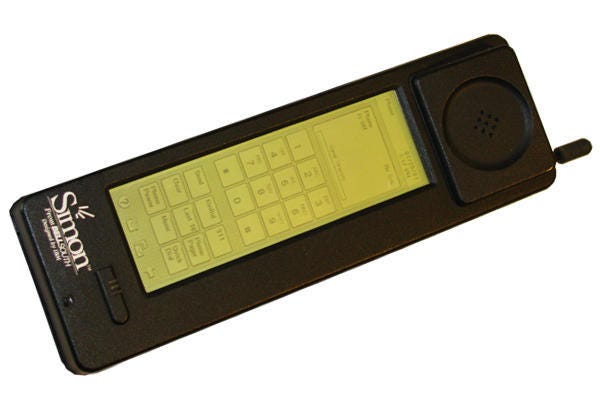
to this:

in
three
years.
I can’t overstate how insane that is. It’s like going from discovering fire to inventing the steam engine in a decade, or going from discovering atoms to using nuclear power in two.
It’s like if one year the cutting edge TV was this:

And three years later it was this:

This is not a pace that humans understand or can deal with. Our laws, our regulations, all take place on a timescale of many years to decades; they don’t have an answer to a technology that became 10x as good as it was while you were still discussing the law. Anything you try to assume gets outdated the moment you assume; anyone who most recently tried the technology only two months ago is as behind as someone using a five-year-old smartphone.
At this point software people, and especially people inside these AI companies, are having to change their entire workflow to keep up with the advances multiple times per year.
This is the fastest rate of change of any technology ever, and it just so happens to be the one technology that applies to everything.
I hope this helps you conceptualize what’s really going on.
Yeah, while people have been wondering when we'll reach takeoff, takeoff has happened.